By JJ Asongu, PhD
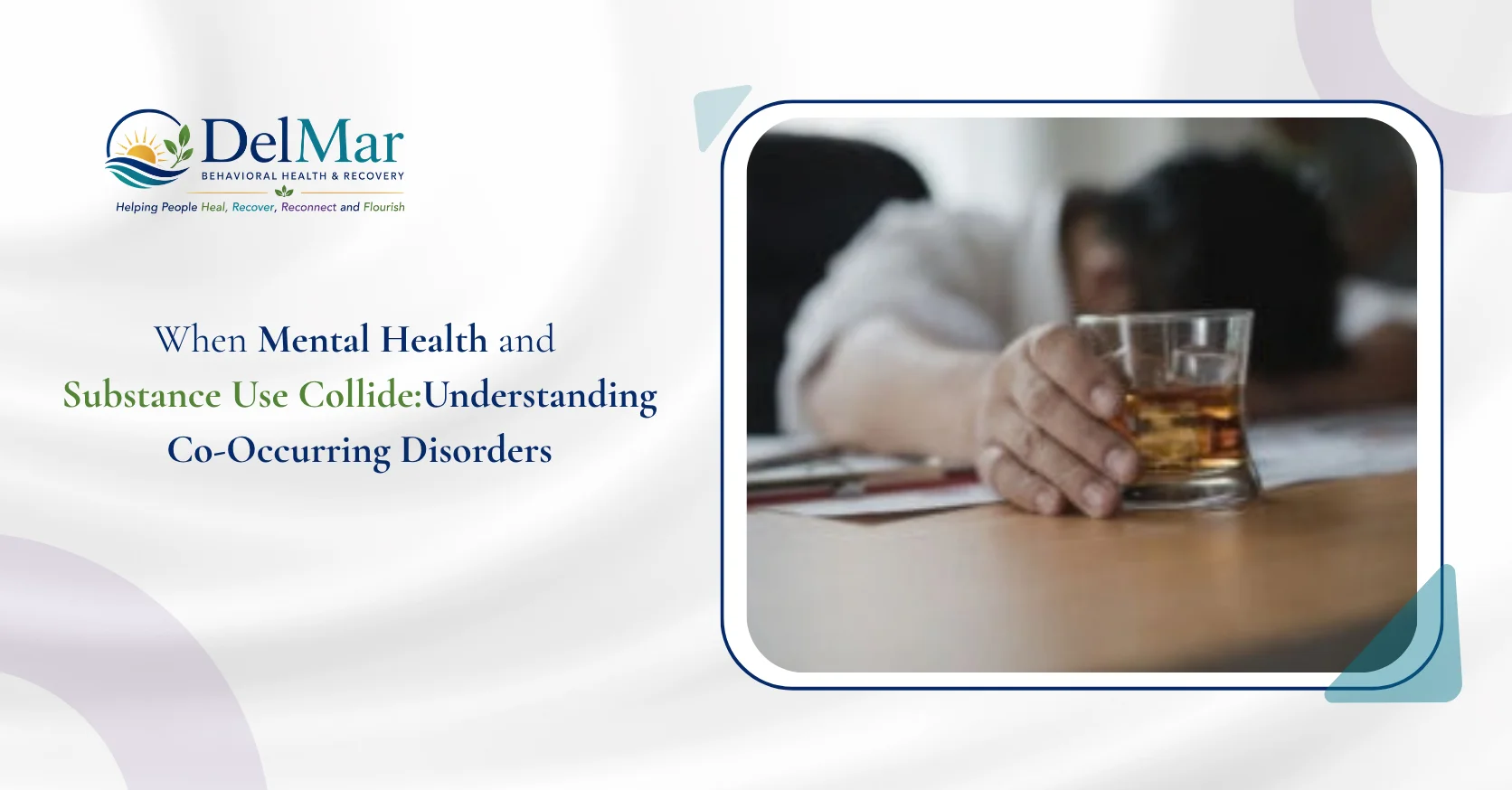
A person struggling with alcohol or drugs may also be living with depression, anxiety, trauma, or another mental-health concern. Sometimes the substance use begins as an attempt to cope with emotional pain. In other situations, prolonged substance use contributes to or worsens psychological symptoms.
When a mental-health condition and a substance-use disorder occur together, they are commonly described as co-occurring disorders.
Understanding this relationship is important because treating only one problem while overlooking the other may make sustained recovery more difficult.
Which Came First?
Families often ask a seemingly simple question: Did the mental-health problem cause the substance use, or did the substance use cause the mental-health problem?
The answer is not always straightforward.
Someone experiencing anxiety may discover that alcohol temporarily reduces feelings of tension. A person living with trauma may use drugs to escape painful memories. Someone experiencing depression may turn to substances for temporary relief from sadness or emotional emptiness.
But the relationship can also operate in the opposite direction. Alcohol and drug use can contribute to changes in mood, judgment, sleep, relationships, work performance, and overall psychological functioning.
Eventually, it can become difficult to determine where one problem ends and the other begins.
Why Treating Both Matters
Imagine treating someone’s depression without seriously examining heavy alcohol use. Or attempting to address repeated drug use without exploring the trauma, anxiety, grief, or emotional distress that may be contributing to it.
Important parts of the person’s experience may be missed.
Effective treatment therefore requires looking at the whole person rather than simply the most visible symptom.
Common co-occurring concerns may include:
- Alcohol or drug problems alongside depression
- Substance use and anxiety
- Addiction and unresolved trauma
- Substance use and grief
- Substance use accompanied by relationship or family difficulties
- Mental-health concerns complicated by repeated relapse
- Substance use associated with significant emotional or behavioral problems
Recognizing these connections can help clinicians and clients develop more appropriate treatment plans.
Recovery Requires More Than Stopping the Substance
Reducing or stopping harmful substance use can be essential, but recovery often requires addressing the reasons a person uses substances and the consequences that have developed around that use.
Treatment may therefore involve psychotherapy, substance-use counseling, relapse-prevention strategies, family involvement, behavioral interventions, recovery support, and coordination with medical or psychiatric professionals when appropriate.
For some individuals, medication evaluation may also form part of a broader treatment plan.
The goal is not simply to ask, “How do we stop the drinking or drug use?”
We should also ask: “What is happening in this person’s life, mind, relationships, and environment that needs attention if recovery is going to last?”
How DelMar Can Help
At DelMar Behavioral Health & Recovery, we recognize that mental health, substance use, relationships, and life circumstances are often interconnected.
Depending on individual needs and service availability, DelMar can provide or coordinate:
- Mental-health assessment and psychotherapy
- Substance-use counseling
- Individual counseling
- Couples and family counseling
- Treatment for anxiety, depression, trauma, grief, and related concerns
- Motivational interviewing and behavioral interventions
- Relapse-prevention planning
- Recovery-oriented support
- Telehealth services
- Coordination with medical, psychiatric, and community providers when appropriate
- Referral to a higher level of care when clinically necessary
DelMar is also developing expanded outpatient substance-use and recovery services in selected jurisdictions, subject to applicable state authorization.
You Do Not Have to Choose Which Problem to Address First
If you or someone you love is struggling with both substance use and emotional or mental-health difficulties, you do not necessarily have to decide which problem is the “real” problem before seeking help.
A professional assessment can help identify how the different concerns interact and what level and type of treatment may be appropriate.
Contact DelMar Behavioral Health & Recovery to begin the conversation.
Phone: 302-437-6742
Email: contact@delmarbhr.com
Serving clients in Delaware, Maine, Maryland, New Jersey and Texas, with telehealth available where clinically appropriate and legally authorized.
Mental health and substance use can become deeply intertwined. Effective recovery begins by treating the person, not merely the symptom.
Important Safety Information
This article is provided for general educational and informational purposes only. It is not intended to diagnose any condition, establish a therapist-client relationship, or replace individualized medical, psychiatric, substance-use, or mental-health evaluation and treatment.
If you or someone else is in immediate danger, experiencing a medical emergency, has overdosed or may have overdosed, call 911 or go to the nearest emergency department.
If you are experiencing suicidal thoughts, thoughts of self-harm, or a mental-health crisis, call or text 988 to reach the Suicide & Crisis Lifeline in the United States. If there is an immediate threat to life or safety, call 911.
Do not abruptly stop alcohol or other substances when significant physical dependence may be present without appropriate medical guidance. Withdrawal from alcohol and certain drugs can become medically serious or life-threatening. Seek medical evaluation or an appropriate withdrawal-management/detoxification service.
DelMar Behavioral Health & Recovery does not provide emergency services through its website, email, or routine telephone messaging. Do not use these communication methods for an emergency or time-sensitive crisis.
About the Author
JJ Asongu, PhD, is a counselor, psychologist, educator, and behavioral-health professional with experience in psychotherapy, substance-use counseling, behavioral health, and human development. His clinical approach emphasizes understanding the whole person and the interconnected psychological, relational, social, and behavioral factors that influence well-being and recovery.
Dr. Asongu provides counseling services through DelMar Behavioral Health & Recovery and is professionally credentialed to practice under applicable licensure and supervision requirements in Delaware, Maryland, and New Jersey.